The Revelation of Dionne Daphne

Trigger warning: this review discusses child sexual abuse and sexual assault.
As I began writing discussion questions for our book club’s meeting on The Revelation of Dionne Daphne, I couldn’t stop thinking about the Cornell 7 case.
In mid-September, a former Cornell student using the pseudonym Jane Doe filed a civil lawsuit alleging that seven members of a fraternity drugged and raped her in 2024.
Days later, The Cornell Daily Sun’s editorial board published “Cornell Won’t, We Will,” opening with the full names of the seven defendants and refusing to let the story disappear. “Cornell has failed to address the growing issue of sexual assault on campus with its pathetic task force,” the board wrote. What happened to Jane Doe, they insisted, was not an isolated incident.
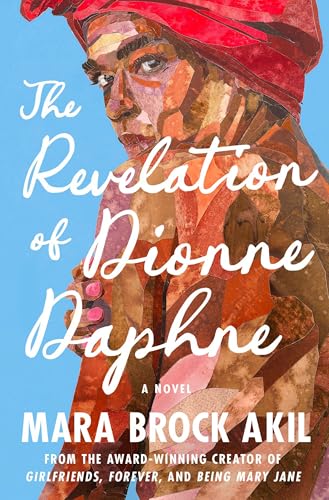
Mara Brock Akil’s novel, The Revelation of Dionne Daphne, is fiction, but re-reading it this month, alongside the concurrent articles about the Cornell 7 case, revealed a shared story. Women are pushed to doubt their own memory while men seem to have the luxury of forgetting.
—
Dionne Daphne has kept a secret since childhood: her stepfather raped her. Decades later, she is forced to confront it when her doctor asks for a list of all her sexual partners. Dionne has been exposed to HIV, which in the 1990s was often fatal, and anyone she may have exposed needs to be told. It’s only while working up the courage to write down the first name on that list that she has to remember the abuse.
Writing the list is like going back in time. Dionne begins to realize that silencing what happened to her in girlhood has shaped her relationship with sex and with men in adulthood. Her preference for quick flings and no commitment reflects a fear of being taken advantage of. The sexual confidence men admire in her is really a way of protecting herself. And her most recent relationship, with a closeted man and very little sex, suggests how uncomfortable she is associating sex with love or care.
With the anticipation of the HIV test results, Dionne decides she must finally confront her stepfather. Yet the closer Dionne gets to home, the more her resolve to confront him dwindles. Back in the bedroom where it all began, she is pulled towards silence again, and even her memory starts to fail her:
“We’ve been pretending so long that we are [an] upstanding Black family and I have this odd feeling my stepfather has no memory of what he did to me, which in turn makes me wonder if it happened at all. This is the betrayal of memory, and the casualty of hiding your pain so well you can’t find the evidence when you need to prove you paid for it many times” (190).
That last line is very similar to what Jane Doe of the Cornell 7 case has had to reckon with. The district attorney cited her initial written statement, which he said described her participation as voluntary, as the reason no one was charged. But that statement was given while she was still processing what had happened to her. Why should a first, fragmented account outweigh everything she has understood since? Why is it so hard to believe that distance from trauma might bring clarity?
Meanwhile, one of the fraternity brothers reportedly said he had no memory of how so many people ended up in the room.
He gets to forget, while she has to carry and retell and relive the story of one of the worst nights of her life. As Jane Doe told the Sun:
“Almost two years later, I still carry the weight of its impact every day and night”
—
Memory can be recovered when someone asks the right questions. What Dionne and Jane Doe share is that almost no one around them asked.
In a heated argument with her biological father, Dionne shames him for never giving her the space, as a child, to tell him what was being done to her. Parents are supposed to be safe havens, the people we run to when life gets scary. But how is a fourteen-year-old girl supposed to run to her mother when her mother is married to the abuser? And how is she supposed to run to her father when he has all but abandoned her? No one asked, so Dionne never told.
If family failed Dionne, Jane Doe was failed by her peers. According to the lawsuit, a message sent to the fraternity’s group chat that night invited other members into the room. The fraternity reportedly had 57 members, and while some replied, many said nothing at all.
Not being one of the seven doesn’t make you innocent. Turning a blind eye to abuse doesn’t make you innocent. Every silence makes it easier to dismiss women’s stories.
—
What unsettles me most is how familiar all of this feels. We’ve read this headline before. A party or a group chat that ends in violence against an innocent woman. Then her story is relentlessly questioned and torn apart— if even brought to light. It’s a never-ending cycle that rarely gets justice.
As consumers, we read the headlines, we wince, and then keep scrolling for something more positive. Institutions mirror that numbness. The Sun bravely criticized Cornell for treating assault as an academic matter. They noted that the students who choose to attend their educational modules about sexual health and consent are likely not the ones committing the crimes. Lectures and pamphlets are not the answer. Accountability and proper consequences are.
—
There’s a turning point in the novel I keep returning to. Dionne doesn’t break her silence for herself. When she returns home to confront her family, she decides that telling her truth will only bring them all pain. She chooses to stay silent. Until she learns that her abuser has been near other young children. The threat to another young girl gives Dionne the courage her own pain never did.
This has been replicated in real life. Since Jane Doe came forward, thousands of women online have posted some version of “I am Jane Doe.” One woman’s disclosure, and the challenge to her testimony, seemingly allowed other women to share their stories.
Following in the footsteps of #MeToo, the “I am Jane Doe” videos are underscoring the number of women who have experienced sexual abuse. If we’re being honest, it’s less common to find a woman who hasn’t.
The Revelation of Dionne Daphne is not an easy book to read, and the Cornell case is not an easy case to follow. Both ask us to do something hard: to believe women whose memories have been worn down by silence, to hold men accountable for what they did and for what they let happen. And as outsiders, we have to refuse the numbness.